TikTok vs Instagram vs YouTube Shorts (Which Platform Actually Converts for Affiliates in 2026?)
Views Are Easy. Conversions Are Not.
Every creator today live on short-form content.
TikTok.
Instagram Reels.
YouTube Shorts.
But very few creators stop to ask the most important question:
Which platform actually turns views into money?
More importantly, how much does a creator's choice of platform influence the conversion rates?
In 2026, this question matters more than ever. Platforms change rules overnight. Monetization tools sit behind eligibility requirements. Entire creator incomes can disappear with a single policy update or algorithm shift.
This blog breaks down TikTok vs Instagram vs YouTube Shorts specifically from an affiliate and commerce perspective, not vanity metrics like views or follower count.
We will cover:
- How each platform distributes content
- How buyers behave on each platform
- Native affiliate tools, including TikTok’s own affiliate engine and TikTok Shop
- Conversion friction and link behavior
- Platform dependency risks, including what happened during the 2024 TikTok ban scare
- How creators can monetize immediately, regardless of platform
How Short-Form Platforms Actually Differ at a System Level
Before comparing conversions, it’s important to understand what each platform is fundamentally optimized for.
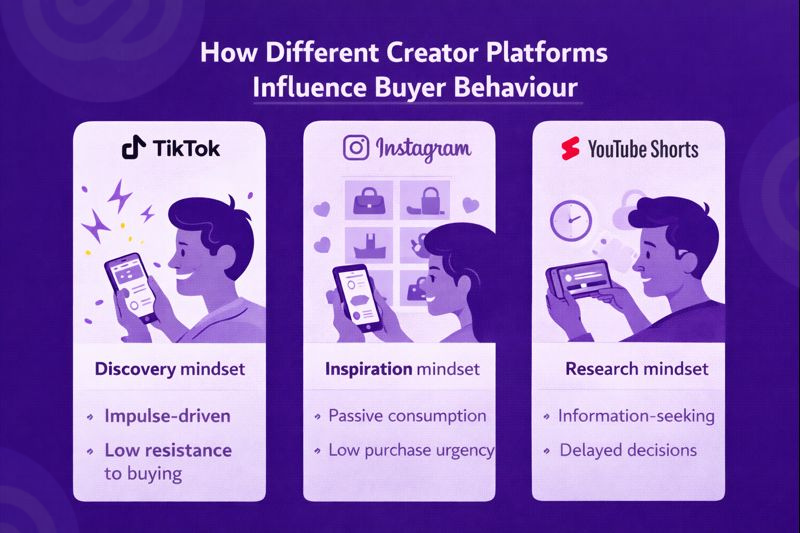
TikTok: Discovery First
TikTok is built for discovery.
Most views come from people who do not follow you. Content spreads based on performance, not relationships. This makes TikTok extremely powerful for:
- Product discovery
- Trend-driven buying
- Impulse purchases
TikTok users expect to see new things. They are open to being influenced.
Instagram Reels: Relationship First
Instagram is relationship-driven.
Reach is heavily influenced by:
- Existing followers
- Past engagement
- Account history
Reels are often consumed in a more passive, aesthetic way. Instagram excels at brand building, but struggles with cold conversions.
YouTube Shorts: Interest First
YouTube Shorts sit inside a larger content ecosystem.
Distribution is influenced by:
- Watch history
- Topic interest
- Long-form behavior
Shorts often act as an entry point into deeper content. This creates a slower but more deliberate path to conversion.
These foundational differences explain why affiliates perform so differently across platforms.
Conversion Intent Comparison: Where Buyers Actually Act
TikTok: High Impulse, Fast Decisions
TikTok has normalized shopping behavior.
Phrases like “found it on TikTok” are now genuine buying triggers. Content blends entertainment and commerce seamlessly.
TikTok performs best for:
- Affordable products
- Clear before-and-after demos
- Problem-solution content
- Trend-aligned products
For affiliates, TikTok often delivers faster conversions even with smaller audiences.
Instagram: Inspiration Over Action
Instagram users are browsing, not buying.
Links feel interruptive. Purchasing usually requires multiple touchpoints. Instagram performs well for:
- Lifestyle creators
- Beauty and fashion inspiration
- Long-term trust building
But as a direct affiliate conversion engine, Instagram remains inconsistent.
YouTube Shorts: Slower but Stronger Intent
YouTube Shorts tend to support a longer decision cycle.
Users often:
- Watch a Short
- Click to a longer video
- Research further
- Then purchase
This makes Shorts effective for:
- Reviews
- Comparisons
- Educational niches
- Higher-consideration products
Native Affiliate and Commerce Tools: Where TikTok Pulls Ahead
This is where TikTok fundamentally separates itself from other platforms.
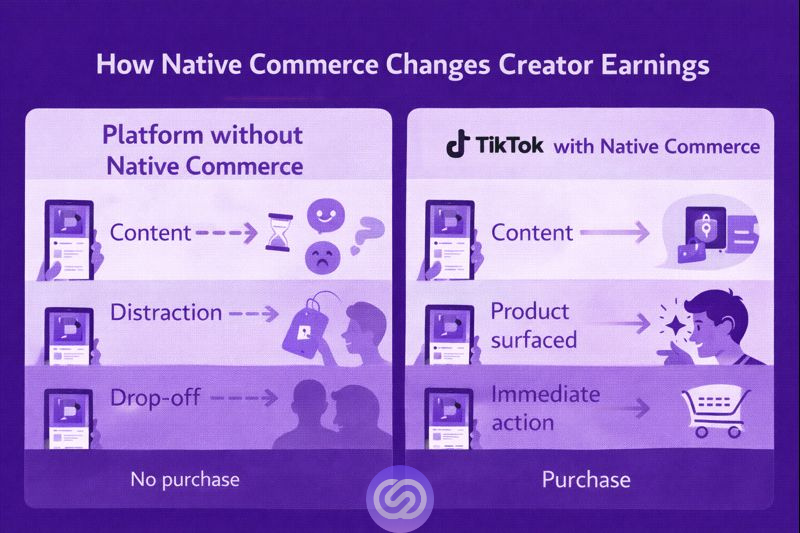
TikTok’s Built-In Affiliate Engine
TikTok is no longer just a content platform. It is a commerce platform.
Its native affiliate system allows:
- Product tagging inside videos
- Creator-product matching
- Commission tracking inside the app
- Reduced friction between content and checkout
Creators no longer need to rely entirely on bio links or external tools.
TikTok Shop
TikTok Shop changed affiliate marketing dynamics by:
- Enabling in-video purchases
- Reducing steps between discovery and checkout
- Actively prioritizing commerce content in distribution
For affiliates, this means:
- Faster purchase decisions
- Higher impulse conversion rates
- Less reliance on external platforms
Instagram and YouTube have not replicated this level of commerce integration at scale yet.
Why Link Friction Matters More Than Views
One of the biggest reasons affiliates struggle to make money on short-form platforms has nothing to do with content quality.
It comes down to link friction.
Link friction is the number of steps, interruptions, and mental barriers a user experiences between seeing a product and actually reaching the checkout page. Every extra step reduces conversions.
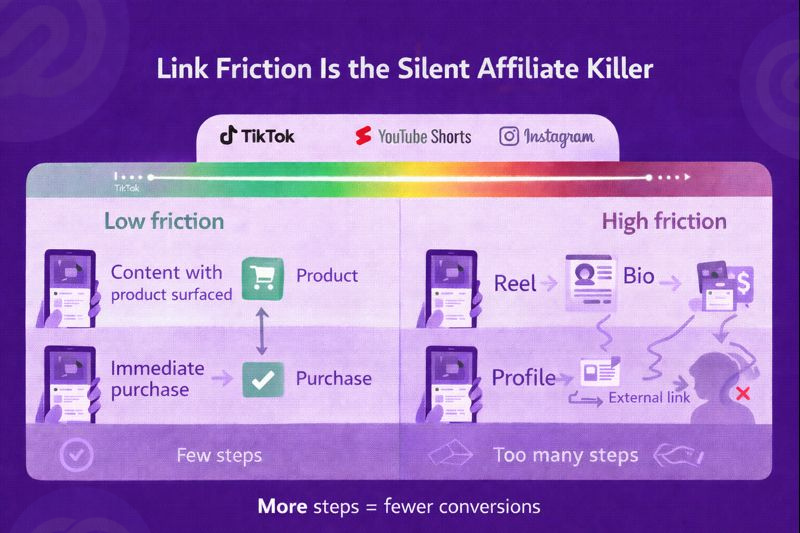
Short-form content already operates in a low-attention environment. If the path to purchase is not immediate and obvious, users simply move on.
This is where platforms differ significantly.
- Links are buried in the bio
- Click behavior is inconsistent
- Heavy reliance on stories
- Low predictability for affiliates
YouTube Shorts
- Limited clickable surfaces
- Often requires long-form bridging
- Slower monetization loops
TikTok
- Product tags inside content
- Profile links actively clicked
- Commerce-native user experience
This structural difference is why TikTok often outperforms in affiliate revenue, even when follower counts are lower.
The Hidden Risk Nobody Talks About: Platform Dependency
In 2024, thousands of creators experienced this firsthand.
TikTok faced regulatory uncertainty and potential bans in multiple regions. Monetization froze overnight for many creators. Campaigns paused. Income streams vanished temporarily.
The real problem was not TikTok itself.
The problem was platform dependency.
When your income lives entirely:
- Inside one app
- Under one algorithm
- Controlled by one policy framework
You do not own your business.
Many creators rushed to build websites as a solution. But that introduced new challenges.
Why Websites Are Not Always the Right Off-Platform Answer
Websites are often presented as the default safety net.
In reality, websites require:
- Technical setup
- Ongoing maintenance
- SEO knowledge
- Content pipelines
- Sometimes entire teams
Most creators are not trying to run a media company. They want to create content and monetize efficiently.
This created a gap.
Creators needed off-platform ownership without enterprise-level overhead.
Monetizing Immediately, No Matter the Platform
This is where Hypelinks fit into the ecosystem. Creators in 2026 need to stop waiting for brand deals and collabs in order to make money, and find platforms where they can directly get in touch with brands.
Whether you create on:
- TikTok
- YouTube Shorts
You still need a way to:
- Start earning immediately
- Track performance
- Centralize affiliate income
- Avoid platform-specific lock-in
Hypelinks allow creators to monetize across platforms using a single, flexible system. You do not need to wait for platform approvals or native tools to unlock revenue.
Your content stays portable. Your income stays flexible.
Hypestores as the Modern Off-Platform Hub
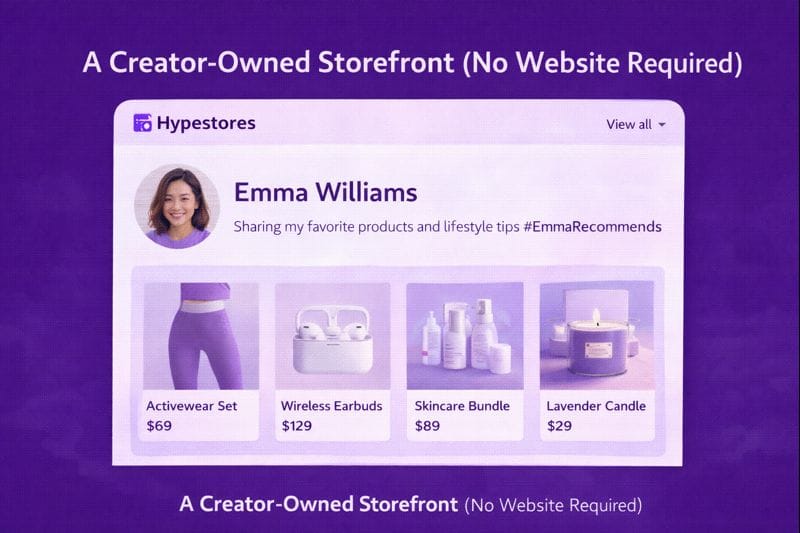
For creators who want more control without building a full website, Hypestores offer a modern alternative.
Instead of dealing with:
- Domains
- Hosting
- WordPress
- Plugins
- SEO teams
Creators get:
- A branded storefront
- Product collections in one place
- Stable, trackable links
- Off-platform ownership
- A system designed for short-form behavior
In a post-2025 world, platform independence is no longer theoretical. It is necessary.
So Which Platform Is Best for Affiliates?
There is no single best platform.
- TikTok excels at impulse-driven conversions
- Instagram builds brand trust over time
- YouTube Shorts support deeper consideration and research
The creators who win in 2026 do not bet everything on one platform.
They build portable monetization systems that work everywhere.
Conclusion: The Smart Creator Strategy in 2026
Short-form platforms will continue to evolve. Policies will change. Monetization tools will come and go.
What should not change is:
- Your ability to earn
- Your ownership over income
- Your independence from platform risk
Choose any platform you want.
Just make sure your business does not depend on only one.