Do Amazon Affiliates Still Need a Website in 2026? The Full Breakdown
Affiliate marketing in 2026 looks nothing like it did during the golden blogging years.
Back then, the path was simple. Buy a domain. Install WordPress. Write reviews. Rank on Google. Make money.
Today, new creators are starting from a completely different place. They are discovering products on Amazon, posting short videos on TikTok and Instagram, and asking a very reasonable question.
Do I actually need a website anymore?
The honest answer is this.
You can absolutely succeed without a website in 2026.
But websites still hold real strategic power in specific niches and situations.
This guide breaks everything down clearly and without nostalgia bias.
We will cover:
- What an affiliate website actually is
- Whether it still helps in 2026
- The data behind retention, search behavior, and conversions
- How websites are built today and what they actually require
- When you should skip a website entirely
- And why Hypestores remove most of the friction creators struggle with
This is not theory. This is how affiliate marketing actually behaves today.
1. What Is an Affiliate Website?
An affiliate website is a site designed to publish content that helps people make buying decisions.
That content usually includes:
- Product reviews
- Side by side comparisons
- Buying guides
- Tutorials
- “Best of” lists
- Deep dives into a single product or category
The goal is simple.
Attract high intent traffic, guide the reader toward a product, and earn a commission when they buy.
From the early 2000s until around 2020, affiliate websites were the backbone of the industry. Blogs were the default starting point.
Modern affiliate websites usually fall into a few categories:
- Review blogs
- Niche authority sites
- Single product microsites
- Deal or discount aggregators
- “Top 10” comparison engines
They still exist. They still work. But they no longer dominate by default.
2. How Does an Affiliate Website Help?
This is where nuance matters. Websites are not useless. They are just no longer universal.
Websites Give Stability in a Volatile Creator Economy
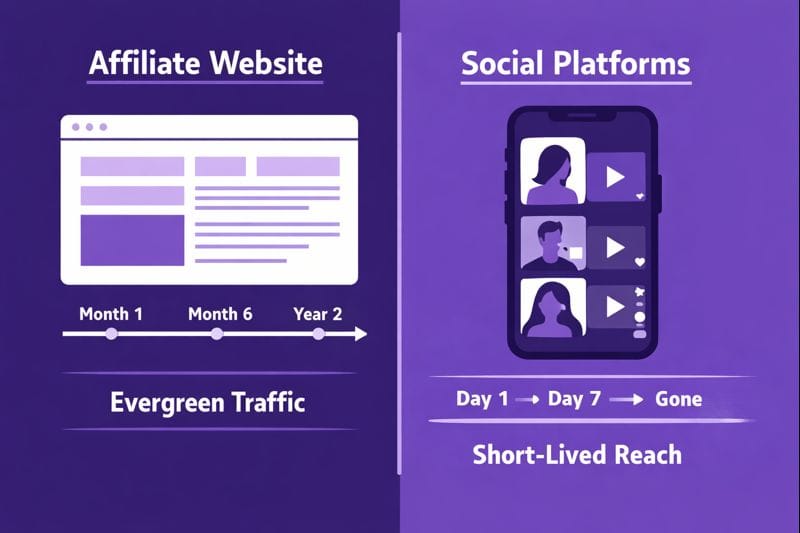
Short form platforms are powerful but fragile.
A TikTok video often has a shelf life of one to three days.
Instagram Reels typically decay within one to two weeks.
Shorts on YouTube last slightly longer but are still inconsistent.
A well written evergreen blog post behaves differently.
It can generate traffic for months or even years with no additional effort once it ranks.
This makes websites valuable for creators who want stability rather than constant posting pressure.
Websites Increase Retention Automatically
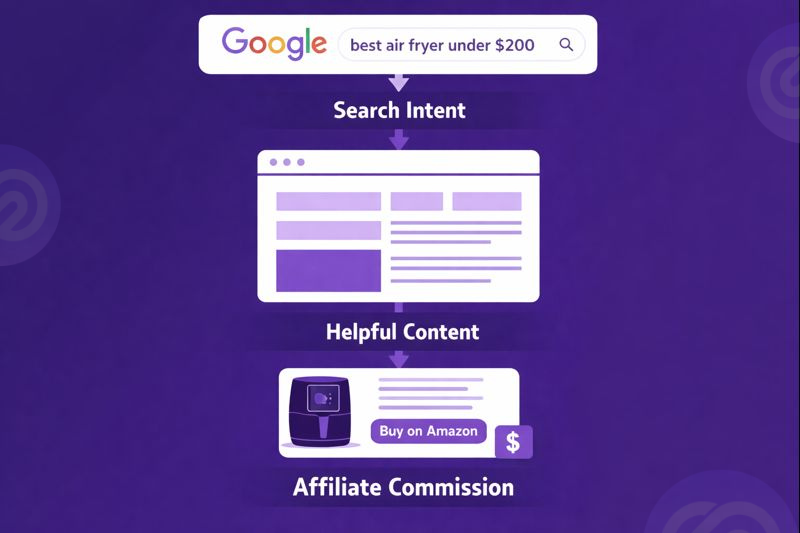
People coming from Google are actively searching for answers.
They are not scrolling. They are pulling information toward themselves.
Because of this, organic search visitors spend more time reading.
Across most affiliate niches, average time on page for review content sits between 2.7 and 4 minutes.
Retention is easier because the intent is already there.
Websites Let You Rank for Long Tail Keywords
A large percentage of affiliate revenue comes from very specific searches.
Examples include:
- best humidifier for baby room 2026
- Dyson V12 vs V15 comparison
- budget espresso machine under 300 dollars
Roughly 70 percent of affiliate conversions come from these long tail queries.
Social platforms are not built to capture this demand reliably. Google still is.
Websites Give You Immunity Against Platform Risk
A website is not subject to:
- Shadowbans
- Algorithm swings
- Account takedowns
- Content suppression
If your social accounts disappear tomorrow, your website content still exists and remains searchable.
That independence still matters for many creators.
Websites Support Multi Touch Buyer Journeys
Most people do not buy immediately after discovering a product.
They research.
They compare.
They leave.
They return.
Then they buy.
Affiliate websites often sit in the middle of that journey. Even if they are not the final click, they influence the decision.
The Honest Truth
Websites help with:
- Retention
- Stability
- Search discoverability
They do not guarantee revenue.
Without niche knowledge, real expertise, and solid SEO, most affiliate websites fail. This is why the success rate today is much lower than it was ten years ago.
3. How to Build an Affiliate Website in 2026
If you decide to build one, here is what that actually looks like today.
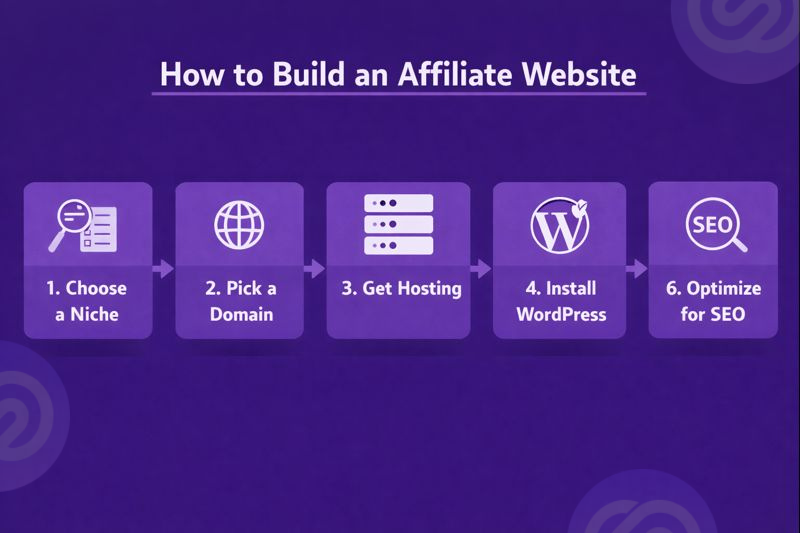
Picking a Niche
Micro niches win. Broad niches fail.
Avoid vague markets like tech or fitness.
Examples of viable niches:
- Kitchen organization
- Small home appliances
- Fishing gear
- Budget home technology
- Pet training tools
Buyer intent matters more than passion.
Choosing the Right Domain
Keep it short and niche relevant.
Avoid over branding early.
A simple descriptive name works best.
Most creators still prefer a .com domain.
Hosting Platforms in 2026
Reliable hosting options include:
- Bluehost
- Hostinger
- SiteGround
- WP Engine for premium setups
CMS: WordPress Still Dominates
Over 40 percent of the internet still runs on WordPress.
It remains popular because:
- It is flexible
- It has the strongest plugin ecosystem
- It is future proof
Essential Tools and Plugins
Affiliate tools:
- AAWP or Lasso
- ThirstyAffiliates for link management
SEO tools:
- RankMath
- Yoast
- Schema Pro
Performance tools:
- WP Rocket
- ShortPixel
Must Have Pages and Content
Every affiliate site needs:
- A clear home page
- “Best” pages
- Comparison posts
- Tutorials
- Deep single product reviews
Choosing the Right Theme
Speed matters more than aesthetics.
Popular lightweight themes include:
- GeneratePress
- Astra
- Kadence
- Blocksy
4. Can You Manage a Website on Your Own?
Yes, but only under specific conditions.
You can manage it solo if:
- You can write or outsource content
- You can learn basic SEO
- You can handle updates and formatting
You need a team if:
- You publish 10 to 20 posts per month
- You target competitive niches
- You run display ads
- You require advanced technical SEO
A realistic solo workflow looks like:
- 2 to 4 posts per month
- Focus on long tail queries
- Minimal overhead
Most affiliate blogs fail because creators underestimate this workload.
5. Can You Do Affiliate Marketing Without a Website?
Yes. Absolutely.
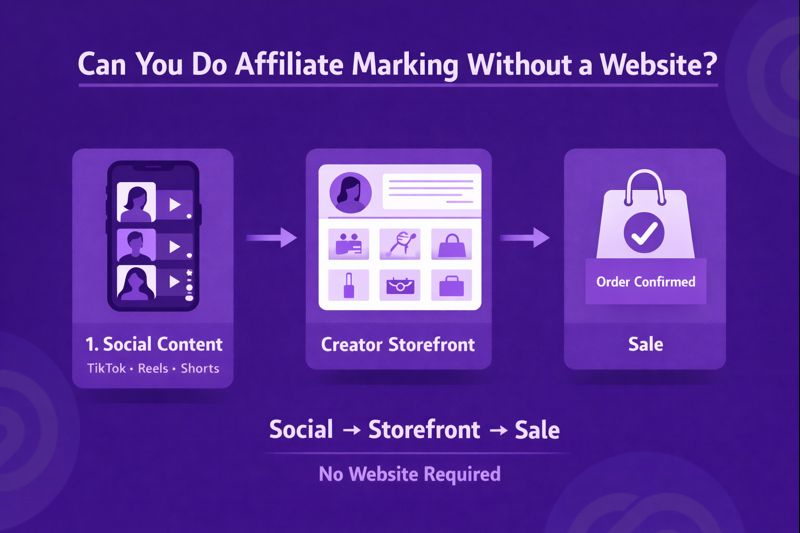
This is where most new creators should start.
You do not need a website if:
- Your traffic comes from TikTok, Reels, or Shorts
- You rely on Amazon Creator Connections
- Your content is unboxings, demos, or POVs
- You want fast monetization
- You use Amazon Storefronts as your hub
- Your niche is visual and impulse driven
Examples include:
- Daily deals creators
- Aesthetic home finds
- Beauty creators
- Unboxing creators
- “Found it on Amazon” accounts
6. When a Website Gives You a Strong Advantage
You likely need a website if you:
- Want long term SEO traffic
- Publish deep technical comparisons
- Want display ad revenue
- Need email capture
- Want a permanent branded home base
This applies strongly to:
- Tech reviewers
- Hobby experts
- Specialized testers
- Evergreen review blogs
7. Can You Replace a Website With Something Easier?
Yes. This is where Hypestores come in.
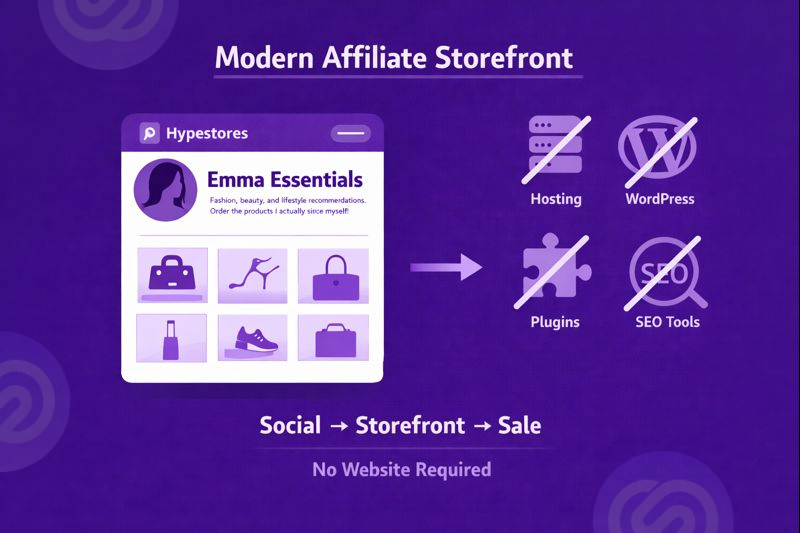
Hypestores solve the biggest friction points creators face.
With Hypestores:
- No hosting or domains
- No WordPress setup
- No plugins
- No SEO learning curve
- No content team
- Clean branded storefronts
- Stable trackable links
- One place to showcase all products
- Higher commissions through direct brand deals
It functions like a modern affiliate website built for mobile first behavior.
8. Are Website Based Affiliates Still Profitable in 2026?
Yes, but only in specific categories.
They perform best in:
- High ticket electronics
- Appliances
- Tools
- Specialized gear
- Expensive hobbies
The challenges today:
- Google updates removed generic review sites
- Trust has shifted toward UGC
- Written reviews convert less without authority
Only niche experts with depth survive.
9. What Most New Affiliates Should Do in 2026
The recommended path is simple.
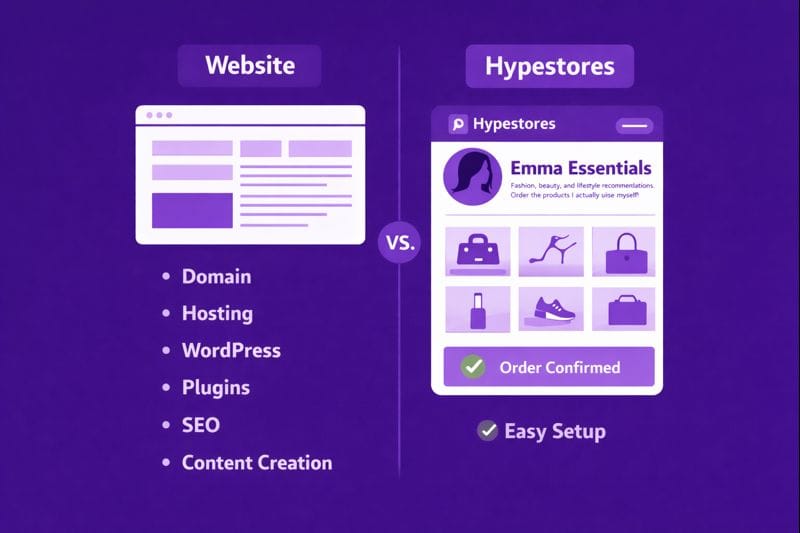
Start without a website.
- Post on TikTok, Reels, Shorts
- Build momentum
- Use Creator Connections
- Use Hypestores as your product hub
Then build a website only if:
- You find a profitable niche
- You see repeat buyers
- You want SEO driven stability
- You want long term income layering
This path has the lowest friction and highest return today.
Conclusion
You do not need a website to succeed as an Amazon affiliate in 2026.
Websites are valuable, but they are no longer mandatory.
Speed beats perfection.
Social first creators scale faster than blog first creators.
Hypestores give creators a no code, low effort alternative that fits how affiliate marketing actually works today.
The smartest move is not choosing sides.
It is choosing the right tool for the stage you are in.