4 Ways Creators Underprice Brands Without Realizing It
When creators think about underpricing, they usually think about brand deal rates.
But in 2026, most underpricing happens outside of brand deals. It happens in systems, links, and structure.
Here are four ways creators consistently leave money on the table without realizing it.
1. Not Being Opted Into Brand Campaigns Automatically
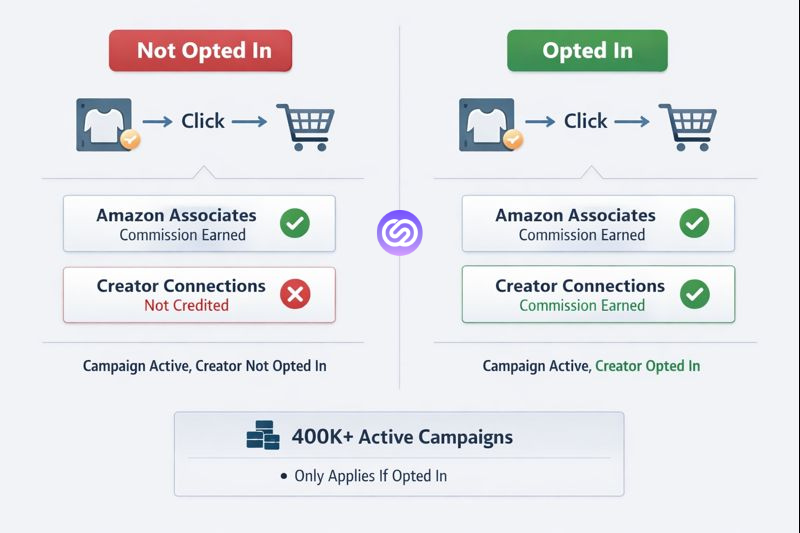
Many creators earning through Amazon today are eligible for two revenue streams on the same sale.
- Amazon Associates, where Amazon pays a category-based commission
- Creator Connections, where brands run performance campaigns and pay creators directly
Important context creators often miss:
- If a product is part of a Creator Connections campaign, a creator can earn:
- Amazon Associates commission
- Plus Creator Connections commission on the same order
- Creator Connections currently has 400k+ active campaigns
- Large publishers are opted into massive numbers of these campaigns by default
The problem for smaller creators:
- Opting into campaigns manually does not scale
- Most creators do not have the time, awareness, or tools to do this consistently
- As a result, they drive sales without getting credited for brand-funded commissions
What this means in practice:
- Brands pay extra to acquire customers
- Creators generate the sale
- The extra payout never reaches the creator
This is underpricing, not because of low rates, but because of missing infrastructure.
2. Using Standard Affiliate Links When Higher Commissions Exist
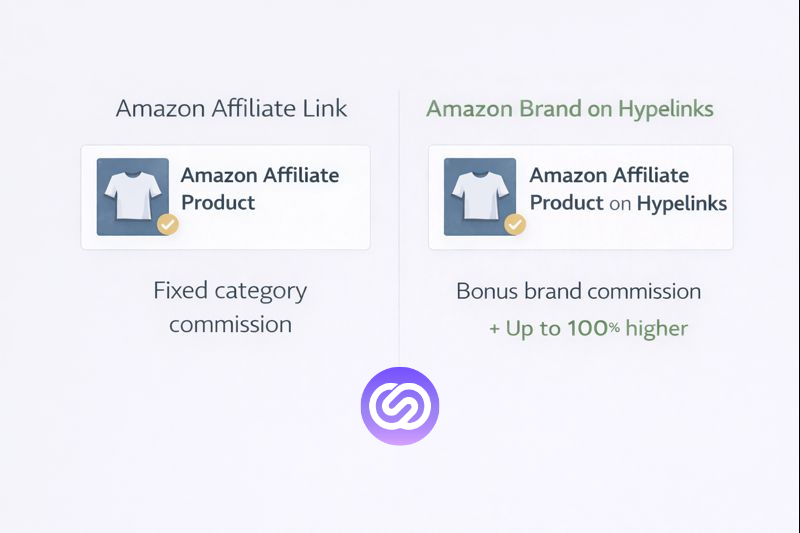
Amazon affiliate commissions are fixed by category.
Even when brands want to pay creators more, they are often restricted by Amazon’s commission structure.
To solve this, brands increasingly use external platforms to:
- Offer higher commissions to high-performing creators
- Incentivize better placements and better content
- Reward creators beyond Amazon’s limits
What creators often do instead:
- Default to standard Amazon affiliate links
- Promote products without checking if higher commissions exist elsewhere
- Earn the base rate even when brands are willing to pay more
The result:
- Two creators promote the same product
- One earns the standard Amazon commission
- The other earns significantly more for the same sale
Platforms like Hypelinks exist specifically to bridge this gap by allowing brands to offer higher commissions for the same products.
If creators do not check for better commission structures, they underprice their output without changing effort, content, or audience size.
3. Treating Content as Disposable Instead of Cumulative
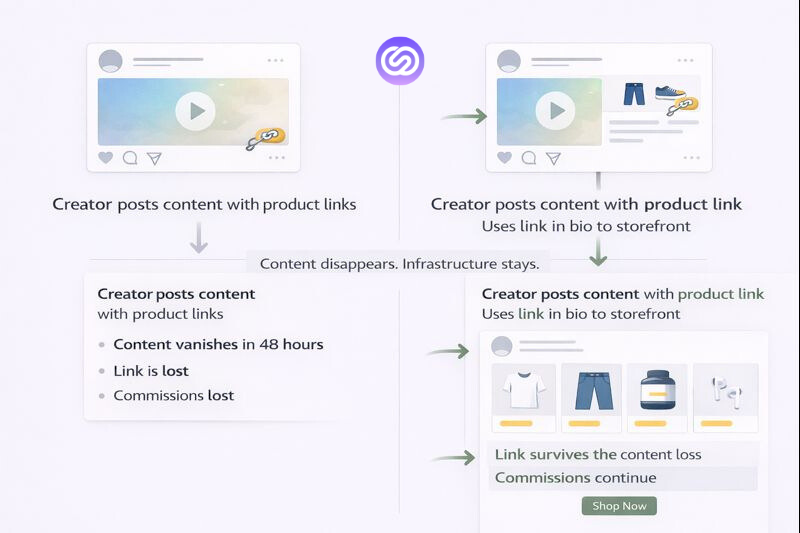
Most creator content has a very short shelf life.
- Stories disappear in 24 hours
- Reels and posts peak and fade within days
- Monetization tied only to the post dies with the post
At the same time:
- Creators do not want to manage full websites
- Websites feel heavy, expensive, and high-maintenance
- Many creators avoid building any long-term surface at all
This creates a monetization gap.
A strong link-in-bio storefront changes the equation:
- Every piece of content feeds into one persistent surface
- One purchase can lead to more purchases
- Old content can still convert weeks or months later
Additional benefits creators often underestimate:
- Brands like seeing their products pinned on creator storefronts
- It signals seriousness and business intent
- It gives brands confidence that the product will outlive one post
This is how creators escape content shelf-life dependency without building a website.
4. Giving Brands All the Long-Term Value
Creators often think in single transactions.
- One post
- One link
- One payout
Brands do not think this way.
Brands think about:
- Customer lifetime value
- Repeat purchases
- Long-term attribution
When creators send traffic to generic product pages:
- The brand captures all future value
- The creator gets paid once
When creators control the buying context:
- Products are revisited
- Discovery compounds
- Monetization becomes ongoing, not one-off
Creators who do not own this layer are not underpaid upfront.
They are underpaid over time.
Frequently Asked Questions
Is this only relevant for large creators?
No. Smaller creators are often affected more because affiliate income makes up a larger share of their earnings.
Do I need to change the type of content I create?
No. This is about monetization structure, not creative direction.
Is this about pushing more products?
No. It is about earning correctly from the products you already promote.
Why do brands care about storefront-style links?
Because they offer persistence, visibility, and better attribution than single-use links.
Is underpricing always intentional?
Almost never. Most underpricing happens because creators lack systems, not confidence.
So that's that. In 2026, the bigger challenge is not to find ways to earn commissions, but to find the loopholes that lead you to lose out on the commissions. Hope this helped.
Adios!